
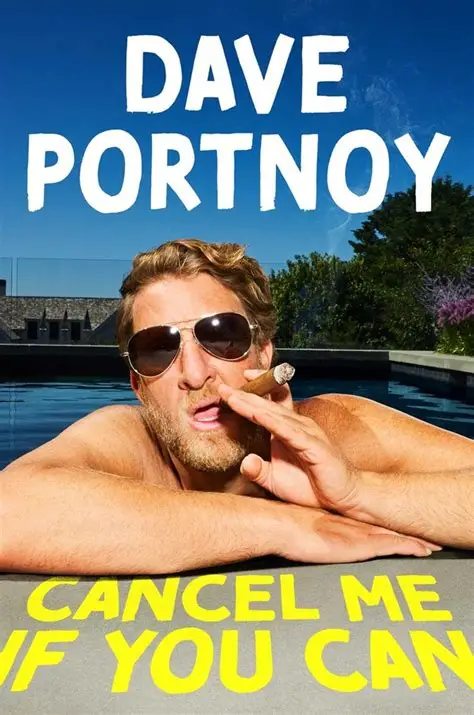
There are some books you read because they’re popular. Others because everyone tells you to. And then there are the ones that come along at exactly the right point in your life.
Dave Portnoy’s Cancel Me If You Can was that book for me.
Whether you consider yourself a Stoolie or you’ve never watched a Barstool Sports video in your life, it’s impossible to deny the impact Dave Portnoy has had on modern sports media. Today, Barstool Sports is a company worth hundreds of millions of dollars, employing dozens of personalities whose podcasts, videos and social media posts reach millions every day. It’s easy to look at what Barstool has become and assume it was always destined for success.
But none of that is where this story begins.
It begins with a 25-year-old Dave Portnoy who has become increasingly dissatisfied with corporate America. While working in a high-paying sales job, he watches one of his co-workers get terminated without warning. One day the employee had a career. The next day he was cleaning out his desk. It was a moment that stuck with Dave. He realized that no matter how hard you worked, your future could still be decided by someone else, and he promised himself he never wanted to be in that position.
That realization became the spark.
Around the same time, Portnoy had grown frustrated with sports media itself. As a compulsive sports bettor, he felt the newspapers and television personalities covering games sounded stiff, polished and overly proper. Everything was filtered through professional journalism, careful wording and political correctness. To him, it didn’t sound anything like the conversations real sports fans were actually having.
His idea was simple. Create a sports and gambling newspaper that sounded like two friends sitting at the bar, sharing a beer while arguing over point spreads, fantasy football, and the Red Sox.
That’s where the name came from.
Barstool.
Armed with that vision, Portnoy sat down with his dad after walking away from a six-figure sales career and made a request that must have sounded completely insane at the time. He asked for a $20,000 loan to purchase over 100 newspaper racks that he planned to scatter across Boston, believing strangers would stop, grab his free gambling paper and eventually become loyal readers.
Imagine that conversation.
Trying to convince your dad that quitting a secure career to hand out a gambling newspaper is actually a good investment. Knowing what Barstool would eventually become makes that opening chapter fascinating, because neither Dave nor his dad had any idea what those newspaper boxes would eventually represent.
That’s one of the things I enjoyed most about this book. You aren’t reading about a successful company. You’re reading about one that hasn’t succeeded yet. And that’s where the real lessons are.
As I read those opening chapters, I found myself thinking less about Barstool’s eventual success and more about that feeling of wanting something different. The details of our journeys are certainly different, but the desire to build something of your own instead of spending a career wondering whether someone else will decide your future is a theme that resonated with me throughout the book.
One of the biggest surprises is just how scrappy those early years really were. Portnoy pulls back the curtain on the startup days of Barstool, explaining the little tricks and shortcuts that helped make the publication look bigger than it really was. He writes about using fake ads and filler content so the paper looked full, writing under different names to create the impression of multiple contributors, and figuring things out as he went instead of following a polished business plan. It’s a reminder that many startups begin by projecting confidence long before they have the resources to match it.
For anyone who wasn’t around during the birth of social media and sports blogging, the book is almost a time capsule. Portnoy walks readers through the transition from a printed newspaper into one of the earliest sports blogs, at a time when blogging itself was still a new frontier. There weren’t many rule books. Social media wasn’t driving traffic. Most people weren’t refreshing websites all day waiting for new content.
Barstool was helping invent that culture.
The stories from those early years are often hilarious. Readers get the origin of recurring features that became staples of Barstool’s identity, including the infamous “Smokeshow of the Day,” and hear how one seemingly harmless post led to an unforgettable confrontation when the father of one featured woman showed up furious, threatening Portnoy over her appearance in the publication. Moments like that perfectly capture how Barstool was constantly pushing boundaries while learning, sometimes the hard way, where those boundaries actually were.
The memoir also spends considerable time pulling back the curtain on some of the biggest public feuds that helped define Barstool’s rise. Portnoy shares his perspective on clashes with ESPN personalities like Samantha Ponder, longtime sportswriter Bill Simmons, and most famously NFL commissioner Roger Goodell.
Readers get the behind-the-scenes story of Barstool’s Deflategate protest, when Portnoy and several employees stormed NFL headquarters and handcuffed themselves together in protest of Tom Brady’s four-game suspension. The stunt helped fuel a years-long feud with the NFL, complete with the now-iconic Roger Goodell clown T-shirts, league bans from NFL events and games, and ultimately Barstool’s return to the Super Bowl when those restrictions were lifted ahead of Super Bowl LX in 2026. Whether you agree with Portnoy or not, the book offers an entertaining look at these moments from inside Barstool rather than through the headlines.
Fans who’ve followed Barstool for years will also appreciate the behind-the-scenes stories about some of the company’s most recognizable personalities. Without spoiling too much, Portnoy discusses difficult departures, evolving relationships and the realities of building a company filled with big personalities, including his thoughts on figures such as Pat McAfee and the challenges that come when talented people eventually chart their own paths.
What fascinated me just as much was reading about the business side of Barstool. Portnoy explains the unconventional marketing ideas that helped the company grow when it couldn’t outspend anyone, how controversy often became free advertising, and how a newspaper sitting inside metal boxes across Boston slowly evolved into a digital brand that now resembles a sports-media version of MTV’s Fantasy Factory, a place where cameras seem to capture everything, personalities become stars and content never really stops.
That evolution didn’t happen overnight.
It happened one risk at a time.
Reading those chapters, I couldn’t help but think about Magnolia Coast Sports. No, Magnolia Coast Sports isn’t Barstool Sports.
And I’m certainly not Dave Portnoy.
But hearing him describe those early years, the uncertainty, the late nights, the feeling that everyone else thought the idea was crazy, felt incredibly familiar. Every article I publish after work. Every evening researching Mississippi sports history, forgotten ballparks or Southern Miss stories. Every time I wonder if the audience I’m hoping for is still somewhere down the road.
Those moments don’t make headlines. But they’re the foundation of building something.
Perhaps the biggest takeaway from Cancel Me If You Can isn’t any single controversy or business deal.
It’s the reminder that every media company starts small.
Before the studio.
Before the podcasts.
Before the viral clips.
Before millions of followers.
There was simply one person willing to bet on an idea when almost nobody else would.
Without revealing too much, Cancel Me If You Can is part memoir, part startup story and part look behind the curtain of one of the most influential sports media companies of the internet era. Whether you’re interested in entrepreneurship, sports media or simply love hearing how successful businesses were built from almost nothing, it’s an entertaining reminder that every empire begins with an idea, and someone willing to take a chance on it.

About The Author
